
SF privacy glass film
Privacy Window Film in San Francisco
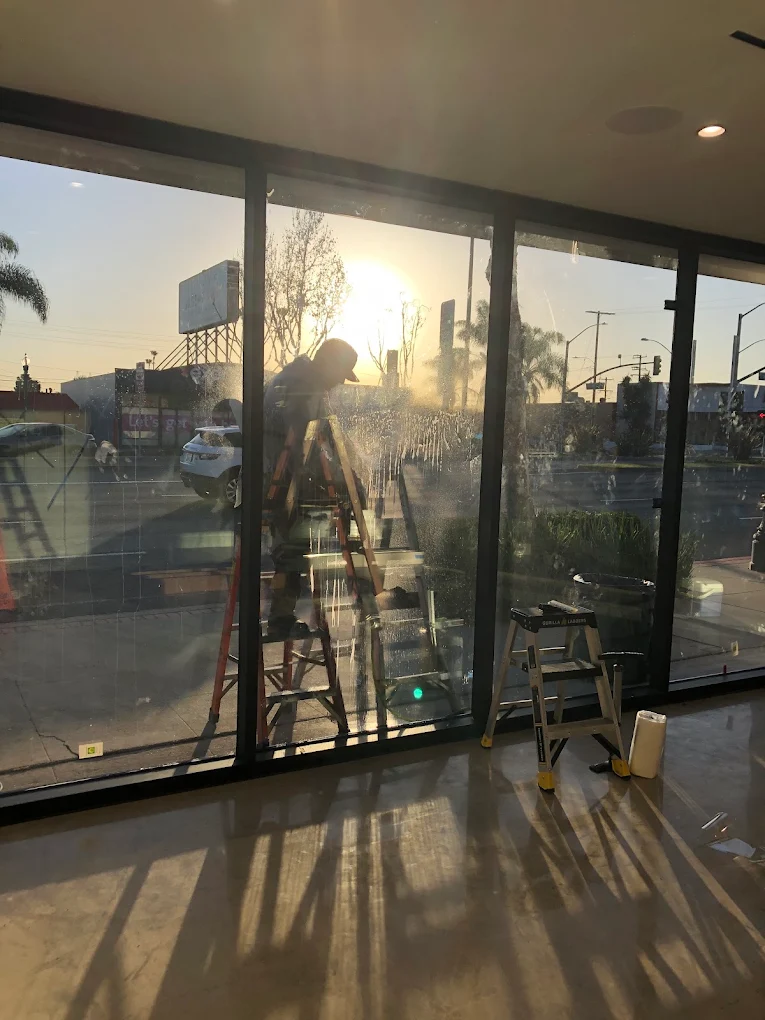
San Francisco houses sit shoulder to shoulder, and many front windows are only a few feet from the sidewalk. Privacy film hides what is happening inside a room but keeps the daylight coming, which matters in a city where light is precious.
 San Francisco
Privacy Window Film for San Francisco Lightwells and Side Windows
The lightwell is a quietly important part of San Francisco housing. Row houses and flats are built wall to wall, so many bathrooms, kitchens and bedrooms get their only daylight from a narrow shaft between buildings. The catch is that the neighbor's window is often directly across, sometimes close enough to read a label on their shelf.
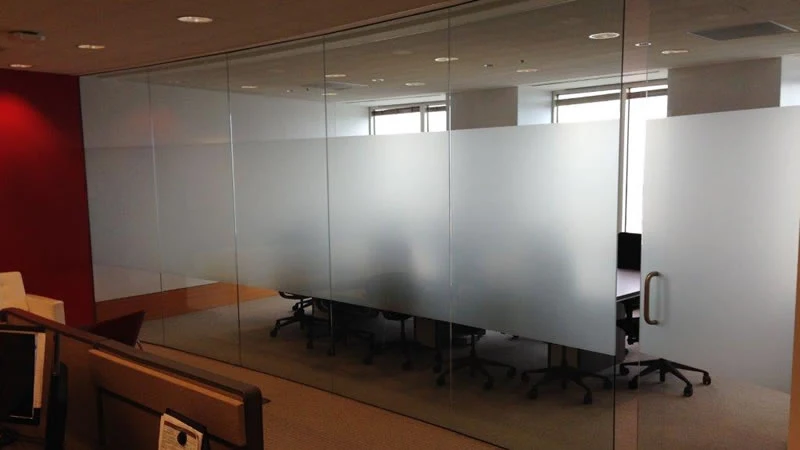
Frosted film is the standard fix. It turns clear glass into a translucent, etched-glass look, so light still fills the room but shapes and faces are blurred. It works day and night, unlike blinds that people forget to close or that block the only light the room gets. On a lightwell window, keeping the light is usually the whole point.
Street-Level Privacy in the Castro, Haight-Ashbury and North Beach
Many Victorian and Edwardian homes in the Castro and Haight-Ashbury have a raised first floor with bay windows set right above the sidewalk, and a garden or garage-level unit below with windows at foot level. Both get steady foot traffic, and in busy blocks people walking by look straight in.
For those windows we often use a gradient or band of frosted film across the lower part of the glass. That blocks the sightline from the sidewalk while leaving the upper glass clear for sky and light. In North Beach, where many flats sit over shops on narrow streets and face apartments across the way, the same approach works on the upper floors.
One-Way Privacy Film and the Night-Time Catch
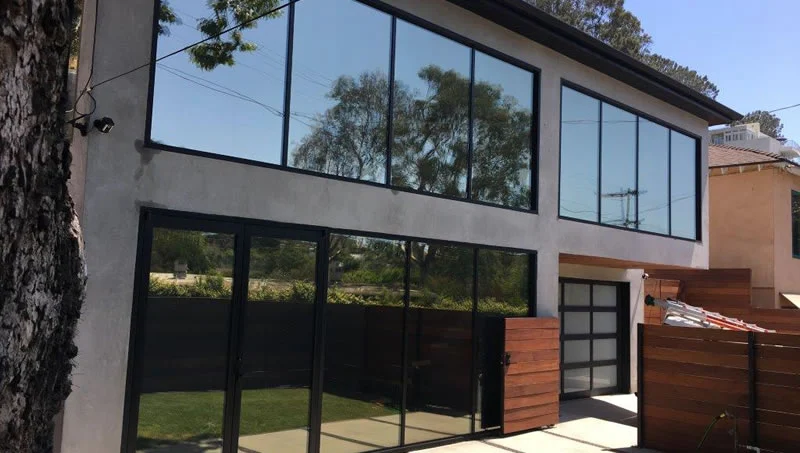
Reflective or one-way films look like a mirror from the brighter side. During the day, the outside is brighter, so people on the street see a reflection while you see out. At night, with lights on inside, the effect flips and the room becomes visible again. That surprises a lot of people, so we explain it before anyone chooses this option.
Reflective films also change how a facade looks from the street. On a period house or in a historic district, a mirrored front window is a visible change that can draw objections. For those homes, frosted bands or a lighter dual-reflective film are usually more appropriate choices. They also look out of step with neighboring houses on a block of matching Victorians.
Bathroom and Bedroom Privacy Film in San Francisco Homes
Bathroom windows in older houses were often clear glass, and many have been covered with curtains or paint over the decades. Film is cleaner and reversible. Full frosted coverage, or a pattern that lets a little light through at the top, gives complete privacy without needing a covering that gets damp.
In the Richmond District and other areas with long rows of houses facing each other across a narrow back yard, rear bedroom windows can be in full view of half a dozen neighbors. A frosted or patterned film on the lower sash keeps the room private and still lets you open the upper sash for air.
- Lightwell windows facing a neighbor
- Garden-level and garage-level units
- Street-facing bay windows
- Bathrooms and shower glass
- Glass entry doors and sidelights
Privacy Window Film Benefits in Close-Packed San Francisco
Privacy Film Keeps Daylight in Dark Rooms
Frosted film diffuses light instead of blocking it, so lightwell rooms and narrow flats keep the daylight they rely on. Blinds and curtains cut privacy problems by cutting light, which is a poor trade in houses that already struggle to stay bright.
Window Privacy That Works Around the Clock
Frosted and patterned films look the same from both sides, so they provide privacy at night as well as during the day. That is the main advantage over one-way reflective films, which lose their effect once the lights inside are switched on.
Partial Privacy Film for Street Windows
Bands and gradients cover only the part of the glass that lines up with a passerby's eyes. You keep the view of the sky, treetops or the street above that line, and the room still feels open while nobody on the sidewalk can see in.
Removable Privacy Film for San Francisco Renters
Film comes off cleanly with heat and a scraper, leaving the glass as it was. Many renters in the city use it in bathrooms and ground-floor units, and landlords generally prefer it to paint or adhesive panels that leave residue.
Privacy Window Film FAQs for San Francisco
After dark, does privacy film still hide my SF living room?
With frosted or patterned film, no, because it diffuses light both ways. With mirrored one-way film, yes, as soon as the lamps inside outshine the street. For after-dark privacy, choose frosted film or add a shade.
Will frosted film make my lightwell room dark?
It reduces light only a little. Most frosted films pass a large share of visible light and spread it evenly, so a lightwell room often feels about as bright as before, just without the view across.
Is privacy film allowed on a historic San Francisco house?
Interior frosted film is generally not treated as an exterior alteration, but reflective film that changes how a facade looks from the street can raise concerns. If your home is a landmark or in a historic district, stick with frosted or neutral films.
Can I still open my windows after privacy film is installed?
Yes. The film covers only the pane itself, so sash weights, sliding sashes and casement hinges work exactly as before.
Window film quote
Plan Privacy Window Film for Your San Francisco Home
Photograph the window and the view it exposes, and tell us whether you want full coverage or a band. Send it through the quote form or info@windowfilmsanfrancisco.pro.
Prefer email? info@windowfilmsanfrancisco.pro