
Sacrificial glass protection
Anti-Graffiti Window Film in San Francisco
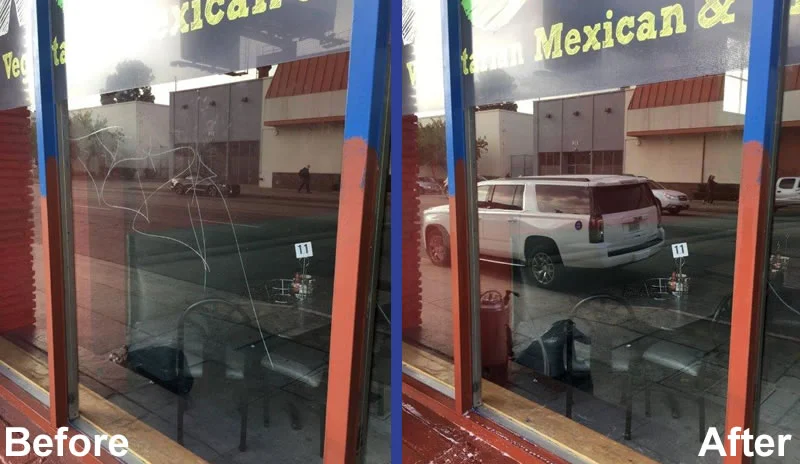
Tags scratched into glass, the vandalism people call scratchiti, are there to stay, and a new storefront pane is a costly fix. Anti-graffiti film puts a clear, replaceable layer between the vandal and your glass.
 San Francisco
Why San Francisco Businesses Use Anti-Graffiti Film
Ink and paint on glass can usually be cleaned. Scratchiti cannot. Tags cut into glass with stones, carbide tips or acid etching leave permanent marks, and on a storefront in a busy area they come back again and again. The usual options are living with the marks, polishing them out at significant cost, or replacing the glass.
Anti-graffiti film changes the math. It is a clear, tough film applied to the glass surface that takes the damage. When it gets tagged or scratched, the film is peeled off and a new sheet goes on. The glass underneath stays clean, and the cost of replacing film is a small fraction of the cost of new glass.
Graffiti Removal Rules and San Francisco Property Owners
San Francisco expects property owners to remove graffiti from their buildings, and Public Works can issue a notice requiring cleanup within a set time if tags are reported and left in place. For shops in heavily tagged areas, that means repeated cleaning bills, or repeated fines if the cleanup falls behind.
On glass, film makes compliance much faster. Instead of scheduling an etching repair or a glass replacement, a damaged film panel can be swapped in a short visit. Many owners keep a record of when panels were replaced so they can show the city the problem is being handled. Some keep a few precut replacement panels on hand for their most-hit doors, which shortens the turnaround even more.
Choosing Anti-Graffiti Film Thickness and Finish in San Francisco
Anti-graffiti films come in a few thicknesses. Thinner films are easier to replace and cost less per panel, which suits glass that gets hit often and needs frequent swaps. Thicker films resist deeper gouges before the scratch reaches the glass, which suits locations where vandals use hard tools rather than markers. On a typical neighborhood storefront, a mid-weight film is the usual starting point.
Finish matters for appearance. Clear films are close to invisible, while some products add a slight matte or frosted texture that hides light scuffing. We usually stay with clear film on display windows so the merchandise looks the way the owner intends, and consider textured film for side windows and doors where visibility is less important.
Anti-Graffiti Film on Haight Street, Mission Street and in SoMa
Some areas see more tagging than others. Storefronts on Haight Street in Haight-Ashbury, along Mission Street in the Mission District and in parts of SoMa get frequent marker and scratch damage, especially on the lower half of the glass and on doors. Corner shops and businesses near bus stops often see the most.
In those locations we usually film the lower part of the storefront, where most tags land, and the full glass on entry doors. Some owners choose full-height coverage. When a shop already has security film on the room side, the anti-graffiti sheet normally goes on the street face, which is where the tagging happens anyway.
Interior and Exterior Anti-Graffiti Film Uses
Most anti-graffiti film for storefronts goes on the exterior face of the glass, since that is where tags are made. It is designed to handle weather and cleaning, but it wears faster than interior film and is meant to be replaced over time. Exterior film is made to be the part that gets damaged and replaced, so the glass never has to be.
Indoors, the same film protects mirrors in restrooms, glass in elevators, partitions in lobbies and transit-adjacent waiting areas, and display cases. Building owners in North Beach and downtown sometimes film restroom mirrors in bars and restaurants, where scratched mirrors are a recurring cost. Hotels and office lobbies use it on elevator mirrors for the same reason.
- Storefront windows and entry doors
- Restroom mirrors in bars and restaurants
- Elevator and lobby glass
- Glass display cases
- Building entry sidelights
Anti-Graffiti Film Benefits for San Francisco Glass Owners
Anti-Graffiti Film Protects the Glass Itself
Scratches, etching and paint land on the film instead of the glass. When the film is peeled away, the original glass underneath is still clean and undamaged. Your storefront glass can last for decades under a series of replaceable films.
Anti-Graffiti Film Costs Less Than New Glass
A fresh sheet of film is a minor expense next to a new plate of storefront glass, and the swap is quick. Businesses with repeat tagging save the most. Owners who get tagged every few weeks see the biggest savings over a year.
Faster Graffiti Cleanup in San Francisco
Swapping a damaged film panel is quicker than arranging glass repair. That helps owners keep up with city expectations for graffiti removal and keeps the storefront looking cared for. Many replacements are done before the shop opens for the day.
Clear Anti-Graffiti Film Keeps Storefronts Visible
The film is optically clear, so displays and signage show through normally. Customers do not see a difference until someone tries to tag the window, and even then the damage lifts away with the film.
Anti-Graffiti Film FAQs for San Francisco
On a busy SF corridor, how often will the film need swapping?
Whenever the marks start to bother you, or when exterior film wears out from weather and cleaning. In heavily tagged locations that may be more often than in quiet areas.
Can anti-graffiti film be cleaned like normal glass?
Yes, with soft cloths and non-abrasive cleaners. Avoid razor blades and harsh solvents, which can damage the film surface.
Will a sacrificial film keep a vandal from breaking the pane?
No. Its job is the surface, taking scratches and paint. For break-in resistance, it can be combined with security film.
Can you replace only the damaged section?
Yes. Film is usually installed in panels that match the glass divisions, so only the damaged panel needs replacing.
Window film quote
Protect Your San Francisco Storefront With Anti-Graffiti Film
Photograph the glass that keeps getting tagged, add rough sizes, and give us a sense of how often it happens. Use the quote form or email info@windowfilmsanfrancisco.pro.
Prefer email? info@windowfilmsanfrancisco.pro